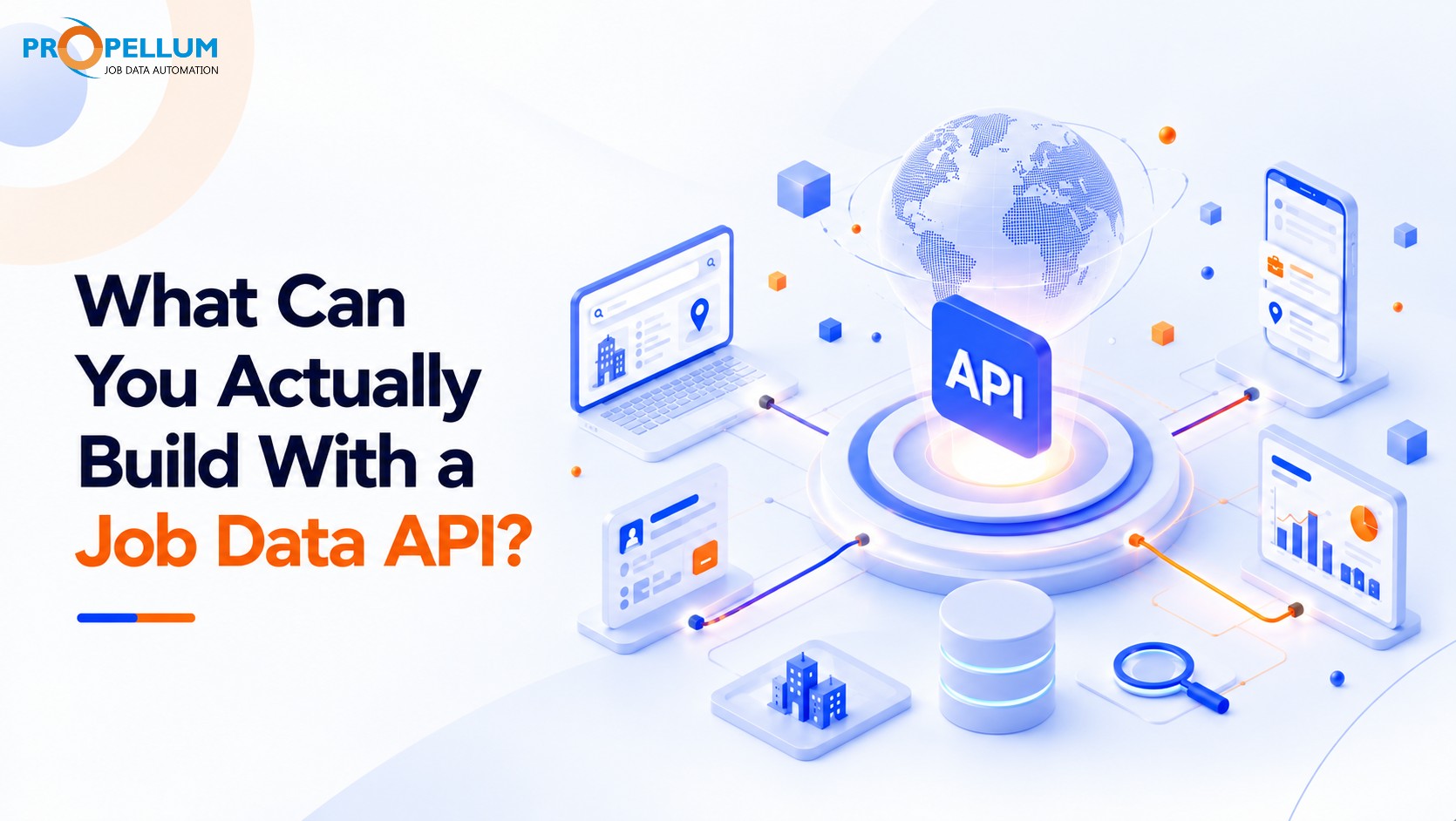
A Job Data API is more than a way to retrieve job listings.
For businesses that need current information about jobs, companies, skills, locations, salaries, and hiring activity, it can serve as an underlying data layer. The API provides the data. The product built on top of it determines how that data is used.
That makes job data useful across a much wider range of products. From job boards and talent intelligence platforms to workforce analytics, sales intelligence, and labor market research, the same underlying data can support very different business use cases.
Job Boards and Job Aggregators
This is the most direct use case for a Job Data API. Job boards need a continuous supply of listings, and an API can provide the structured job data needed to power their inventory.
But receiving a large number of jobs is only part of the equation. The data also needs to work inside the product. Job titles, locations, companies, skills, and other fields need to be structured so candidates can search, filter, and find relevant opportunities.
For job aggregators, the API can become the core data layer. The platform can then focus on building the experience around that inventory, including search, discovery, filtering, and candidate engagement.
Talent Intelligence Platforms
Job postings provide useful signals about how companies are hiring.
New openings can show where a company is expanding. Frequently requested skills can indicate the capabilities employers are looking for. Changes in hiring activity can also help build a broader picture of demand across companies and industries.
Talent intelligence platforms can use this information to organise and analyse hiring activity across employers, roles, skills, and locations. A Job Data API provides the underlying records, while the platform turns that information into insights for its users.
Workforce Analytics Products
Workforce analytics products need a clear view of changes in the wider labor market.
Job data can help track hiring demand across industries, locations, roles, and skills. Analysed over time, it can show how employer demand changes and where particular types of hiring activity are increasing or decreasing.
The quality of the underlying data matters here. If records are duplicated, locations are inconsistent, or closed roles remain active, the analysis becomes less reliable. Structured, normalised, and current job data provides a stronger foundation for workforce analysis.
Sales Intelligence Platforms
Job postings can also provide useful hiring signals for sales teams.
A company hiring for new roles, expanding a team, or opening positions in a new location can provide useful context about its current activity. Sales intelligence platforms can combine this information with other company data to help users identify organisations showing specific hiring patterns.
A Job Data API gives these platforms a continuous source of structured hiring information. Users can then analyse activity by company, role, location, skills, or other relevant data points.
Labor Market Research
Job data is also useful for businesses and organisations studying the labor market.
It can support analysis of demand for specific roles, the skills employers are looking for, hiring activity across industries, and changes across locations. When the data is tracked over time, it can also help identify broader patterns in employer demand.
For this type of research, coverage and consistency are critical. The data needs to be structured in a way that makes jobs from different employers and sources easier to compare.
What Makes a Job Data API Useful?
A simple job feed can provide listings. A useful Job Data API needs to make those listings easier to build with.
Freshness is important because jobs open, change, and close continuously. Structured data makes information easier to search and filter. Enrichment and normalisation make records from different sources more consistent, while deduplication helps reduce repeated listings.
Coverage matters because the usefulness of any analysis depends on the market represented by the data. Reliable API delivery then ensures that the data can be consistently integrated into the product.
Together, these factors determine whether job data is simply available or genuinely useful.
The API Is the Data Layer Behind the Product
The same job data can support very different products.
A job board can use it to power search and listings. A talent intelligence platform can analyse hiring demand. A workforce analytics product can track trends over time. A sales intelligence platform can use hiring activity as one of its company-level data signals.
What changes is how the product structures, analyses, and presents the information.
That is why choosing a Job Data API is about more than asking how many jobs it can deliver. The more important question is whether the data has the freshness, structure, coverage, and reliability needed for what you want to build.
Build on a Stronger Job Data Foundation
Propellum provides job data for businesses building products around hiring and labor market information. Its data infrastructure includes direct sourcing from employer career pages, structured job records, enrichment, normalisation, deduplication, freshness management, and reliable API delivery.
Whether you are building a job board, talent intelligence platform, workforce analytics product, sales intelligence solution, or labor market research platform, the quality of the product starts with the quality of the data underneath it.
A Job Data API provides the foundation. Your product determines what you can build with it.
Explore Propellum’s Job Data API →
Frequently Asked Questions
A Job Data API provides programmatic access to structured job information. Depending on the provider, this can include job listings and related information such as companies, locations, skills, salaries, and hiring activity.
A Job Data API can support job boards, job aggregators, talent intelligence platforms, workforce analytics tools, sales intelligence platforms, and labor market research products.
Job listings change continuously. Fresh data helps products reflect new openings, changes to existing jobs, and roles that are no longer active.
Job data normalisation makes information from different sources more consistent. This makes the data easier to search, compare, and analyse.
The same job can appear through multiple sources. Deduplication helps reduce repeated records and provides a cleaner view of the available job market.
Key factors include freshness, structured data, enrichment, normalisation, deduplication, coverage, and reliable delivery. The right API should provide data that fits the product you want to build.